
Over 10 years we helping companies reach their financial and branding goals. Onum is a values-driven SEO agency dedicated.

LATEST NEWS
CONTACTS

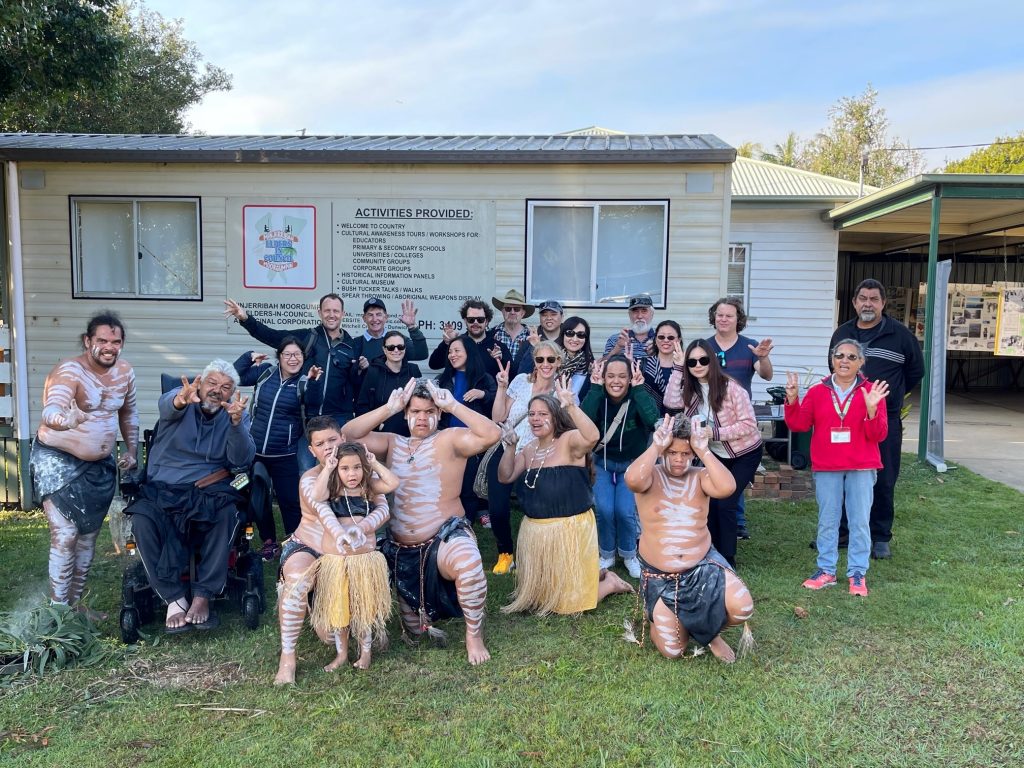
WELCOME TO COUNTRY

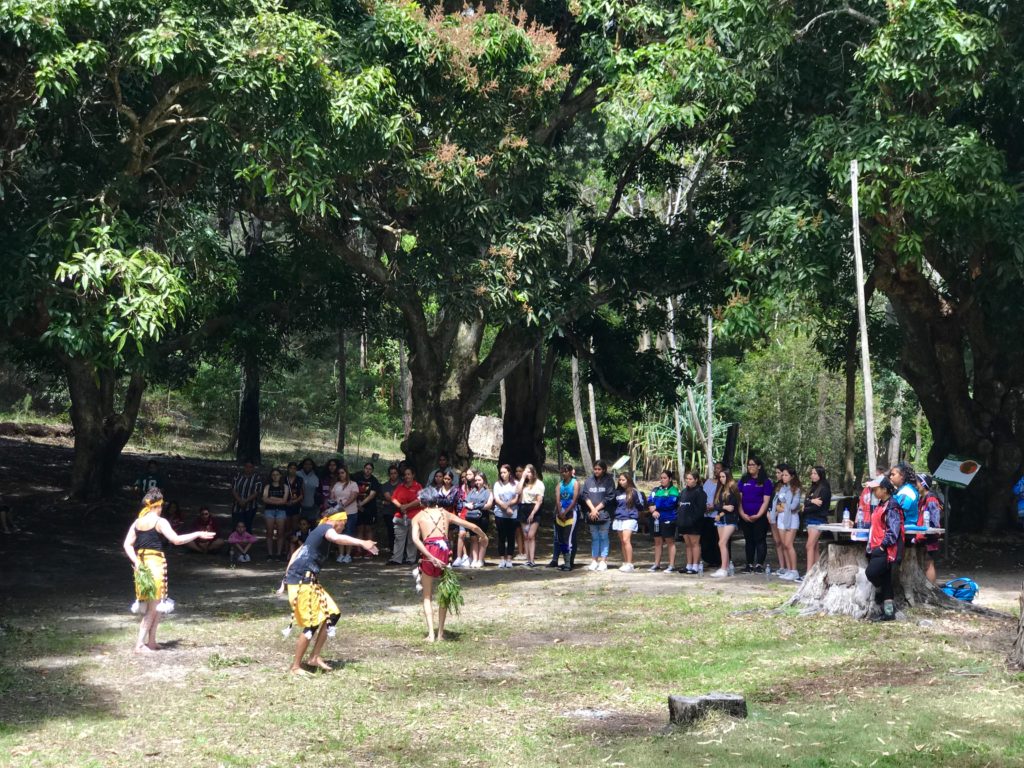
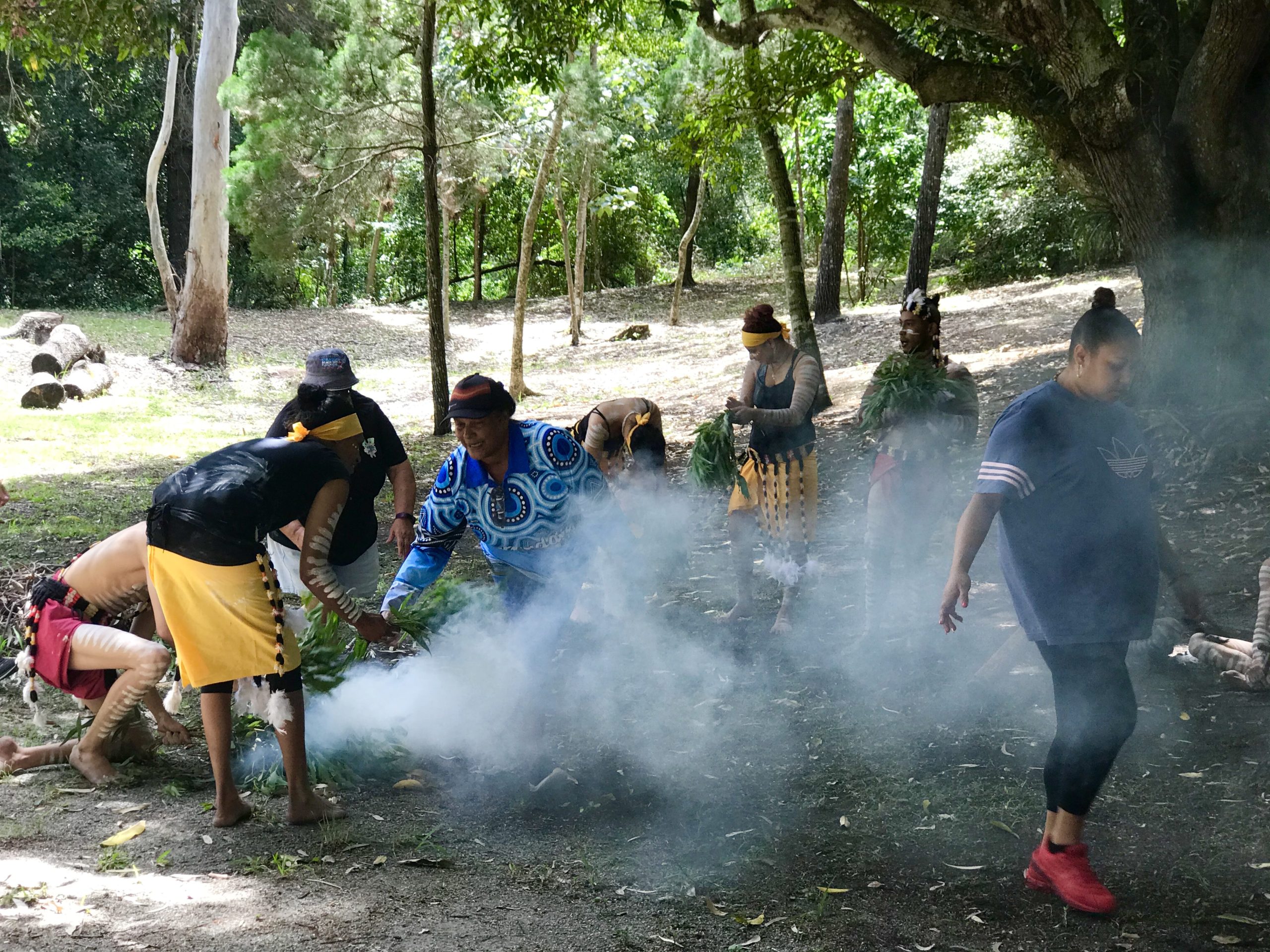
Ceremonies and protocols are a fundamental part of Australia’s First Nations Cultural Traditions, Law/Lore. Arranging a ‘Welcome to Country’ to be delivered by the regions Traditional Owners, and/or  ‘Acknowledging the Traditional Custodians of the Land’ shows respect for Aboriginal People as Australia’s First Peoples.  

Book a MMEIC Goenpul [Goren-pul], Ngugi [Noog-ee] or Noonuccal [Noo–knuckle] Traditional Owner Elder to deliver a ‘Welcome to Country’ at your next event or special occasion on Quandamooka Country. 

Submit a request to book a Welcome to Country.
CULTURAL AWARENESS TRAINING

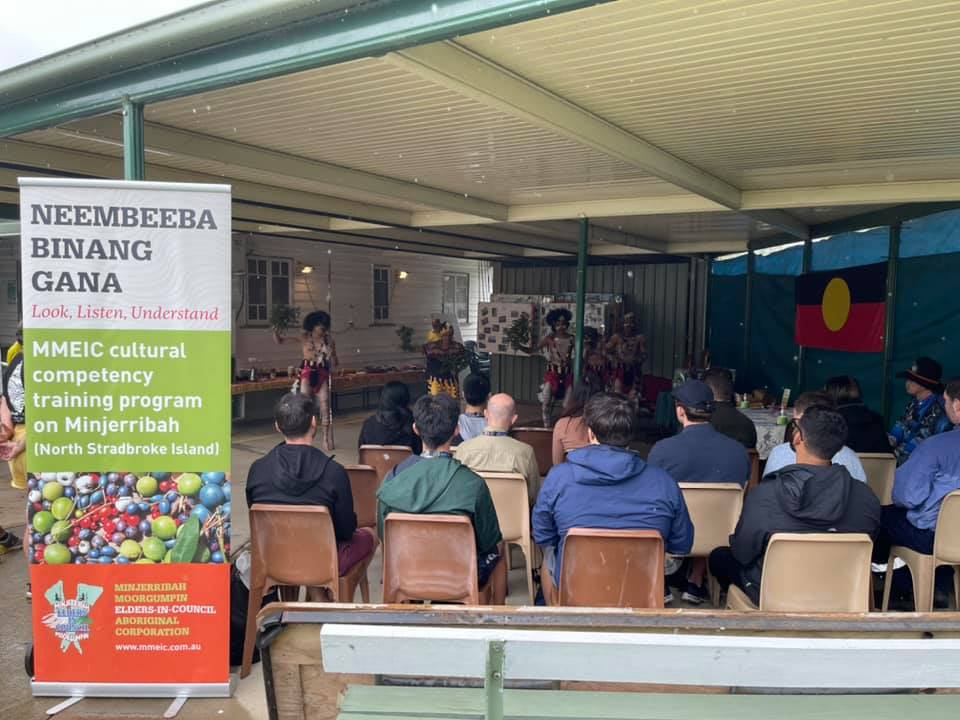
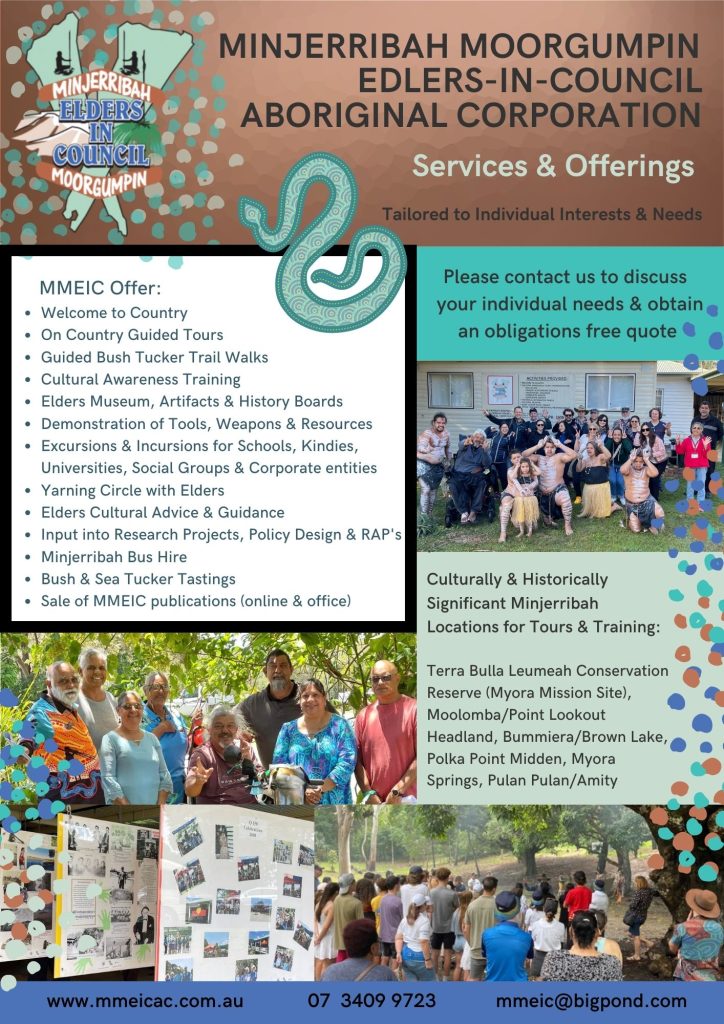
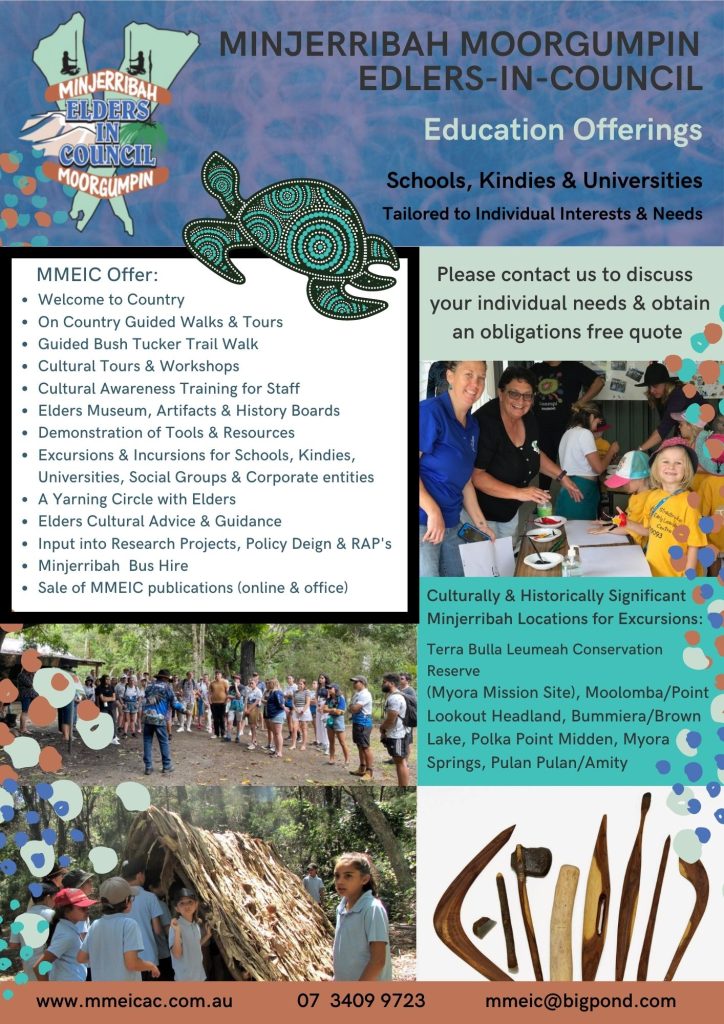
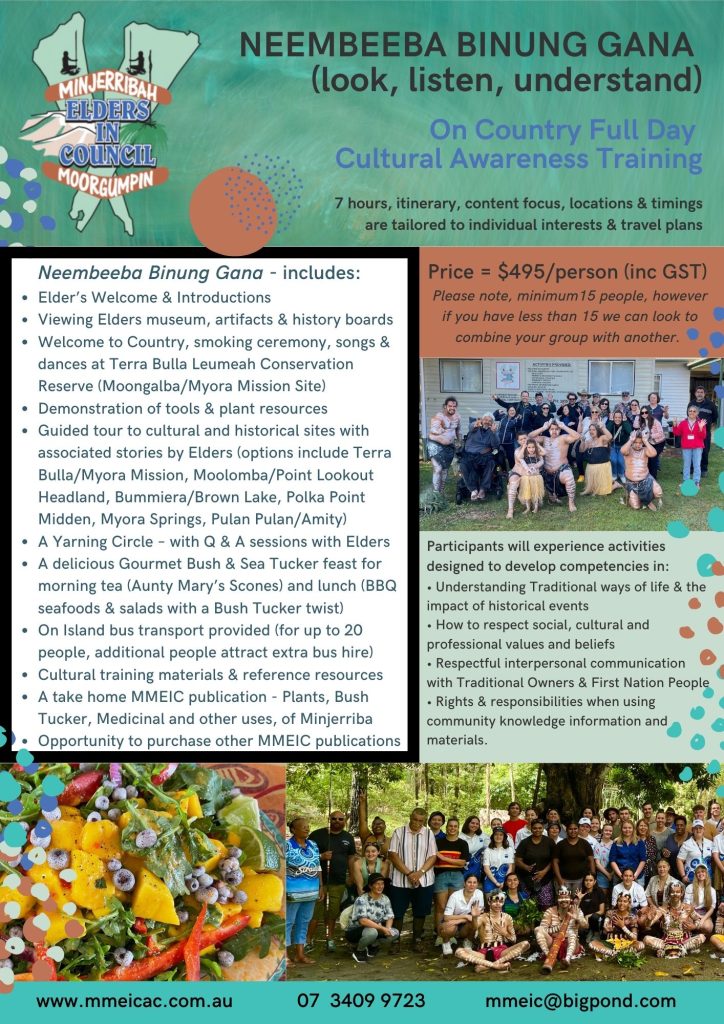
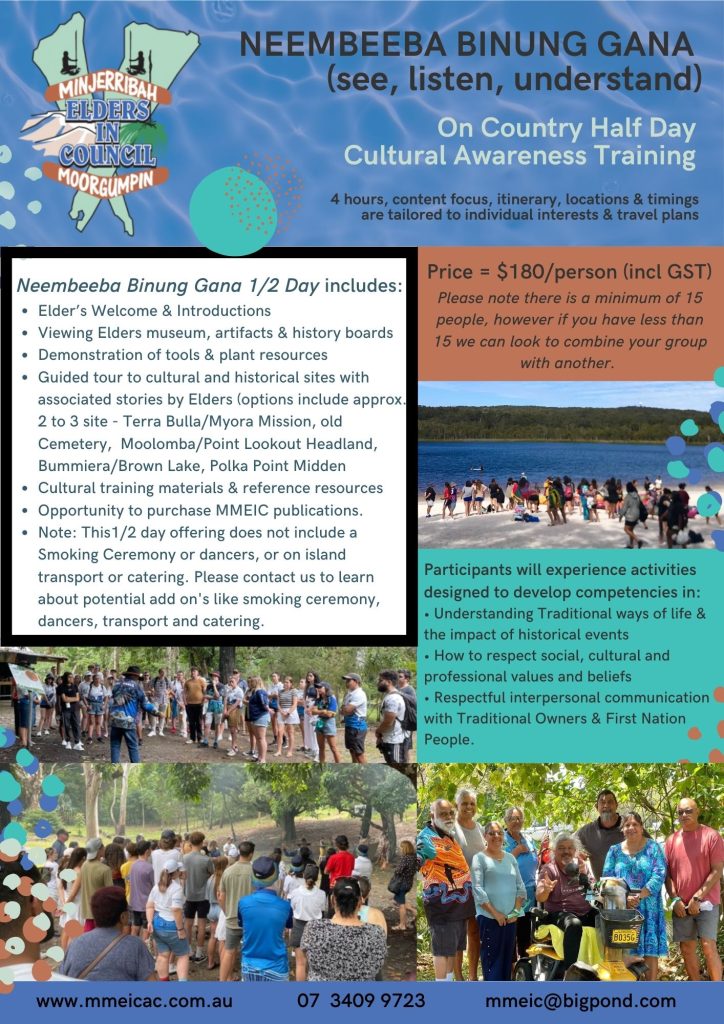
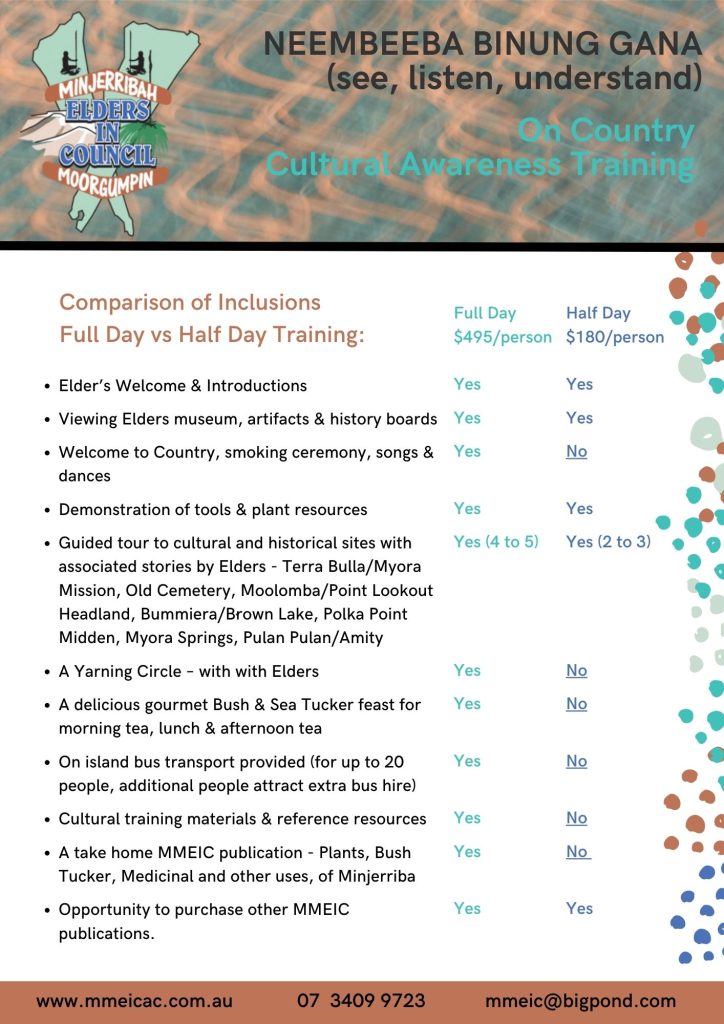
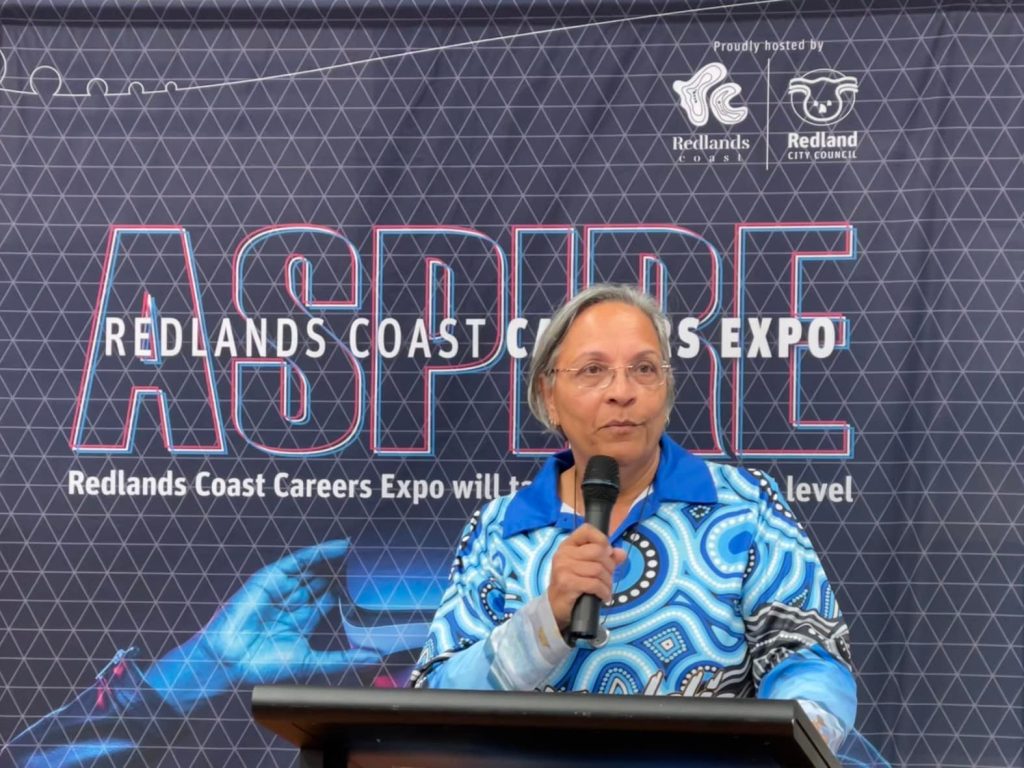
MMEIC Elders deliver Cultural Awareness Training, offered as both Full Day and Half Day experiences (see flyers below for further detail).

This training provides participants with a deeper understanding of how to engage respectfully with First Nations People, explore key historical events and their ongoing impacts, and hear directly from Elders about culture, protocols and ways of being.

Through guided, on-Country learning, participants gain insight into Traditional Owner knowledge systems, including cultural and natural resource management, languages and traditions of the Goenpul (Goren-pul), Ngugi (Noog-ee) and Noonuccal (Noo-knuckle) peoples of the Quandamooka region.

Program Focus Areas

This program is delivered through an on-Country cultural immersion experience led by Quandamooka Elders and tailored to the interests of each group deliving practical and grounded in lived experience content — supporting meaningful learning, reflection and respectful engagement.

Key focus areas include:

  • Connection to Country Learning about Traditional Owner relationships to land and sea, including cultural and natural resource management practices in the Quandamooka region.
  • Culture, History and Protocols Gaining insight into traditional ways of life, local cultural protocols, and the social and historical events shaping First Nations lived experiences.
  • Respectful Engagement Building skills for respectful social, cultural and professional communication with First Nations People.
  • Cultural Rights and Responsibilities Understanding appropriate use, sharing and protection of cultural knowledge and materials.
  • Yarning Circle with Elders Participating in a guided Yarning Circle to listen, reflect and learn from Elders’ perspectives and lived experiences.
  • Justice and Anti-Racism Understanding historical and contemporary justice issues and exploring practical ways to foster an anti-racism future. 
  •  
  • Submit a request to book:
  • Full Day – Cultural Awareness Training
  • Half Day – Cultural Awareness Training

On Country Tours and Talks

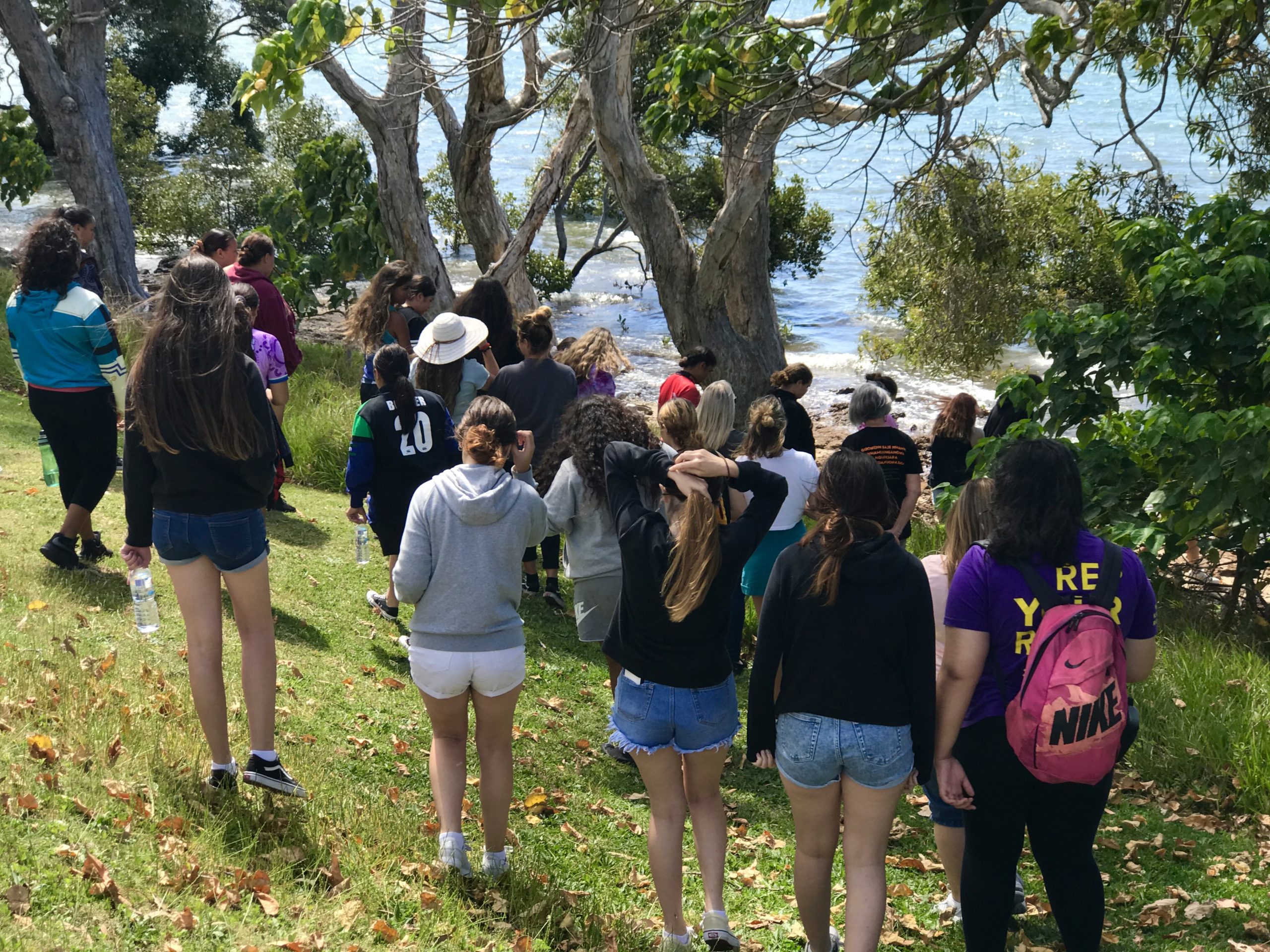
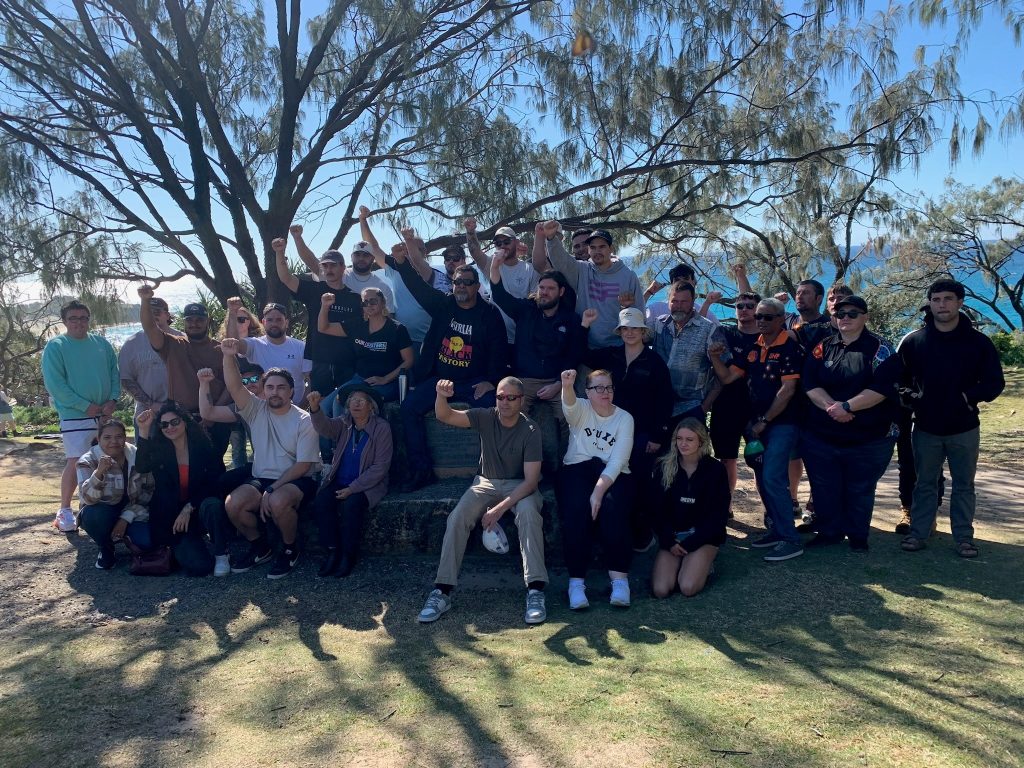
MMEIC Elders offer On Country Tours and Talks that provide a meaningful opportunity to learn directly from Traditional Owners on Country.

Guided by Elders, participants gain insight into the culture, history, languages and traditions of the Goenpul, Ngugi and Noonuccal peoples, as well as an understanding of cultural protocols, ways of being and the deep connection between people, land and sea.

Sessions are tailored to suit different audiences, including school students, university students, workplace staff, conferences and family or community groups.

Possibilities include:

  • Terra Bulla Leumeah Conservation Reserve (Myora Mission Site) – Exploring mission history, displacement, resilience and ongoing cultural connections.

  • Moolomba – Cultural connections to sea Country, navigation, storytelling and coastal knowledge.

  • Bummiera – Freshwater systems, cultural protocols, environmental care and significance of inland waters.

  • Polka Point Midden – Evidence of long-standing occupation, traditional food systems and cultural continuity.

  • Myora Springs – Traditional living areas, freshwater sources and connections to daily life on Country.

  • Pulan Pulan – Early contact history, cultural exchange, community life and enduring connections.

Specific sites included in each tour or training session are confirmed in consultation with Elders and may vary depending on cultural protocols, group size, weather and program focus.


Minimum participant numbers apply and vary depending on the type of offering. Please contact us to explore options and discuss the most suitable experience for your group. 

Submit a request to book an On Country Tour and Talk 

TERRA BULLA LEUMEAH CONSERVATION RESERVE

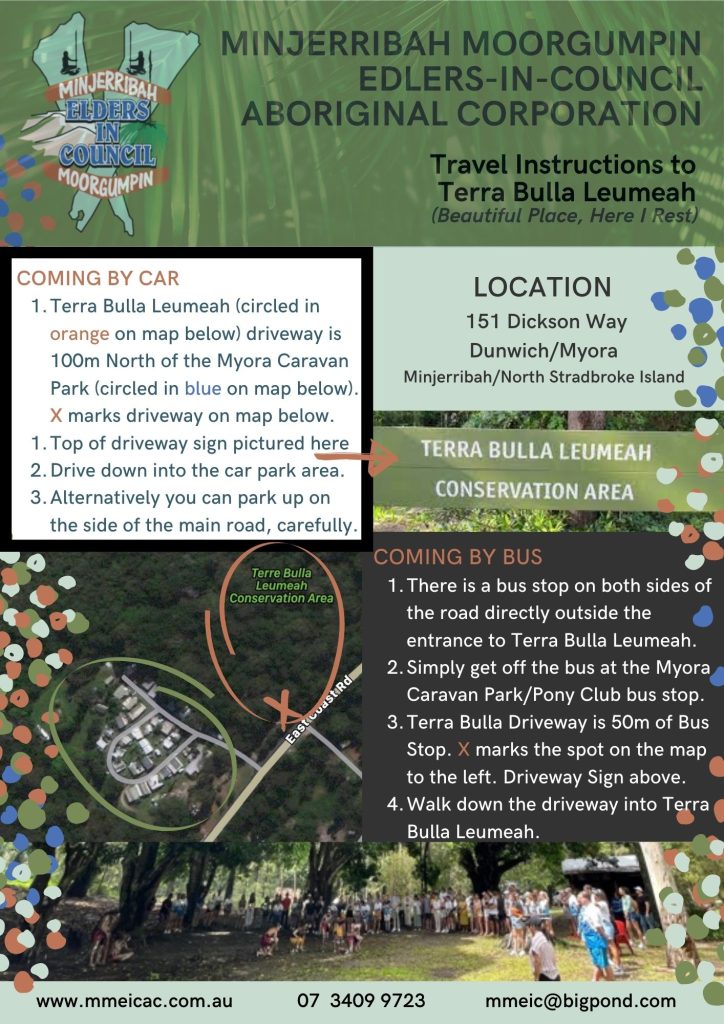
MMEIC Elders lobbied the then Redlands Shire Council (Now Redlands City Council) for the return of a portion of Moongalba – our Traditional Camp grounds, or “sitting down place” to community. This led to the re-zoning of the site, which was also the site of Myora (Mission) and Aboriginal Reserve as a conservation reserve to be co-managed by MMEIC.

The conservation reserve was named “Terra Bulla Leumeah” (meaning “beautiful place here I rest”) in the language of the Dharawal (Traditional Custodians of the area in NSW now known as Campbelltown City) who camped at Moongalba near the water’s edge during their journeys to the Bunya feasts.

MMEIC convenes cultural events and celebrations, on this site, and has created a wheelchair accessible Bush Tukka Garden to educate visitors about the traditional and medicinal uses of our plants as well as educate people about Terra Bulla’s cultural and historical significance.

MMEIC Elders lobbied the then Redlands Shire Council (Now Redlands City Council) for the return of a portion of Moongalba – our Traditional Camp grounds, or “sitting down place” to community. This led to the re-zoning of the site, which was also the site of Myora (Mission) and Aboriginal Reserve as a conservation reserve to be co-managed by MMEIC.

The conservation reserve was named “Terra Bulla Leumeah” (meaning “beautiful place here I rest”) in the language of the Dharawal (Traditional Custodians of the area in NSW now known as Campbelltown City) who camped at Moongalba near the water’s edge during their journeys to the Bunya feasts.

MMEIC convenes cultural events and celebrations, on this site, and has created a wheelchair accessible Bush Tukka Garden to educate visitors about the traditional and medicinal uses of our plants as well as educate people about Terra Bulla’s cultural and historical significance.